


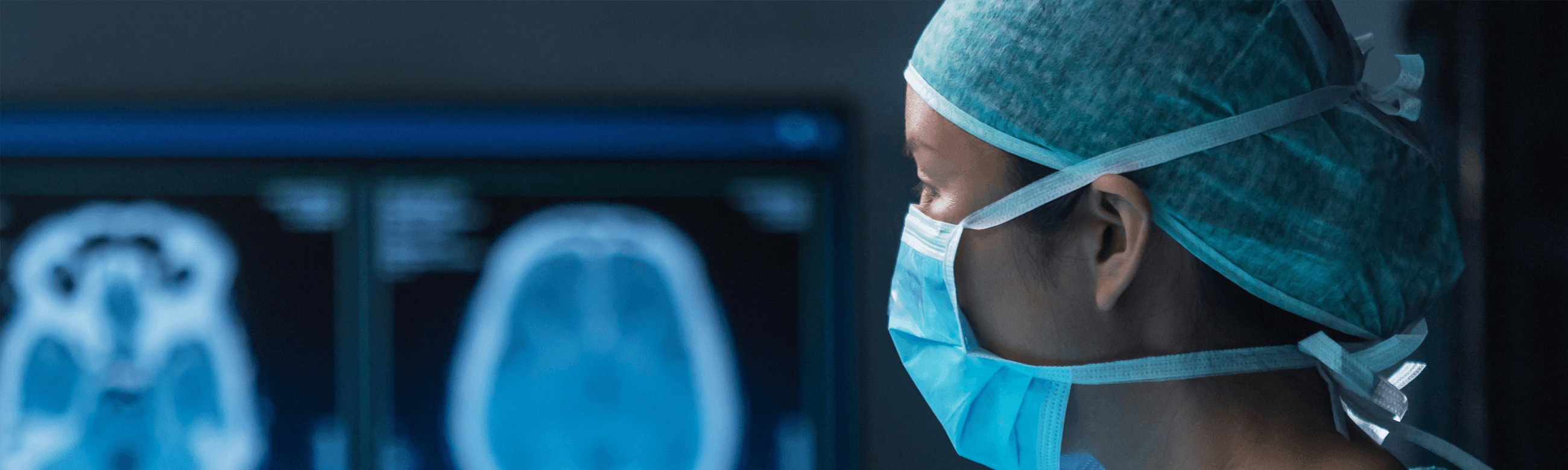




The 6th Neurosurgery Clinic specializes in the comprehensive management of conditions affecting the central nervous system (brain and spinal cord), peripheral nerves, the spine, and musculoskeletal chronic pain syndromes.
By utilizing advanced technological tools such as:
- Surgical microscope
- Endoscope
- Neuronavigation systems
- Intraoperative neurophysiological monitoring
and applying minimally invasive techniques, in collaboration with a multidisciplinary team (anesthesiologists, neurologists, neurophysiologists, physiatrists, etc.), the Clinic covers the full spectrum of modern clinical neurosurgery, including prevention, diagnosis, treatment, and follow-up.
Spinal Fusion with Facet Joint Implants for Degenerative Spine Disease
Our Clinic is the only private clinic in Greece specializing in minimally invasive spinal fusion using facet joint implants.
Our Department, along with specially trained collaborators, was among the first to implement this technique, which involves the placement of specialized implants within the facet joints of two or more vertebrae, stabilizing the spinal segment.
This technique offers:
- Shorter operative time
- Minimal to no intraoperative blood loss
- Reduced hospitalization time (less than 48 hours when pedicle screws are not used)
- Faster and smoother postoperative mobilization
- Improved functional recovery
- Minimal to no postoperative pain
- Absence of long-term low back pain
Facet joint fusion may be performed in appropriately selected patients with degenerative disc disease or degenerative facet joint disease (isolated facet-based symptomatic back pain), provided there is no associated lateral recess stenosis, significant spinal instability or fracture, spondylolisthesis, spinal tumors, spondylodiscitis, or any acute or chronic systemic or local infection.
To date, no cases of recurrence, implant failure, or material displacement have been reported.
Stem Cell Transplantation in Paraplegic and Quadriplegic Patients
Since 2005, in collaboration with Egas Moniz University, the largest academic institution in Portugal dedicated to advanced studies in the medical field, and under the supervision of Professor Carlos Lima, our team has been trained in and performs surgical transplantation of stem cells derived from the olfactory mucosa in patients with paraplegia and quadriplegia following spinal cord injuries.
Brain Disorders
For the management of brain disorders, advanced microsurgical and neuronavigation techniques are applied, including surgical resection of brain tumors, open or stereotactic biopsy of brain tumors, neuronavigation-guided biopsy, as well as procedures such as placement of ventriculoperitoneal and lumboperitoneal shunts, performance of third ventriculostomy, implantation of intrathecal infusion pumps, and placement of DBS (Deep Brain Stimulation) systems by a specialized team, among others.
In general, the following conditions are treated:
- Brain tumors, skull base tumors, pituitary tumors, ventricular system tumors, and craniovertebral junction lesions
- Vascular diseases (aneurysms, arteriovenous malformations, Moyamoya disease)
- Traumatic injuries (epidural, subdural, and intracerebral hematomas)
- Spontaneous intracerebral hemorrhages
- Disorders of cerebrospinal fluid circulation (hydrocephalus)
- Infectious diseases (abscesses, empyemas)
Spinal Disorders
For the management of spinal disorders, all conventional surgical techniques are performed, including microdiscectomy, laminectomy and decompression of the spinal canal, foraminotomies, corpectomies, cervical fusion with a self-locking cage, instrumented spinal fusion with pedicle screws and rods, lumbar interbody fusion (TLIF, PLIF, ALIF), and kyphoplasty, as well as advanced techniques such as minimally invasive spinal fusion with facet joint implants and endoscopic surgery, using anterior, posterior, and lateral approaches based on individual patient indications.
The following conditions are treated:
- Degenerative diseases of the cervical, thoracic, and lumbar spine (disc herniation, spinal stenosis, spondylolisthesis, etc.)
- Epidural, intradural, and intramedullary tumors
- Traumatic injuries of the spinal cord and vertebrae
- Spinal instability and osteoporotic fractures throughout the spine
- Infectious diseases (spondylodiscitis, epidural abscesses)
- CSF diversion procedures (e.g. for syringomyelia)
- Congenital conditions (Tarlov cysts)
- Minimally invasive pain management therapies (facet blocks, nerve root blocks, sacroiliac joint injections) performed by a specialized team
Peripheral Nervous System Disorders
- Carpal tunnel syndrome
- Ulnar nerve entrapment syndrome
- Tumors (schwannomas)