






Our Department specializes in the treatment of the full spectrum of vascular diseases of the brain, the cervical region, and the spinal cord. Our team consists of a neurosurgeon, an interventional radiologist, a neurologist, and a vascular surgeon, all with specialized training in the United States.
The Director of the Clinic, Neurosurgeon Dr. Machinis, has completed dual training (dual-trained neurosurgeon) in the United States and uses endovascular or open cerebrovascular techniques, depending on the particular characteristics of each case.
Minimally invasive brain surgery
Through modern neuronavigation systems and specialized microsurgical instruments, the surgeon is guided to the most difficult-to-access areas of the brain through incisions of only a few centimeters. This makes it possible to remove benign and malignant tumors (primary and metastatic), as well as vascular malformations.
Minimally invasive brain surgery also includes the use of an endoscope through the nasal cavity, at the skull base, allowing access to deeper areas of the brain (anterior cranial fossa, sella turcica, clivus, etc.). In this way, pituitary adenomas, Rathke’s cleft cysts, meningiomas, chordomas, craniopharyngiomas, and other conditions of the aforementioned anatomical regions are treated in the optimal way. The main advantage of minimally invasive brain surgery is the reduction of morbidity caused by the surgical approach. As a result, the patient has smaller scars, or even none at all, less postoperative pain, a shorter hospital stay, and faster recovery.
Minimally invasive spine surgery
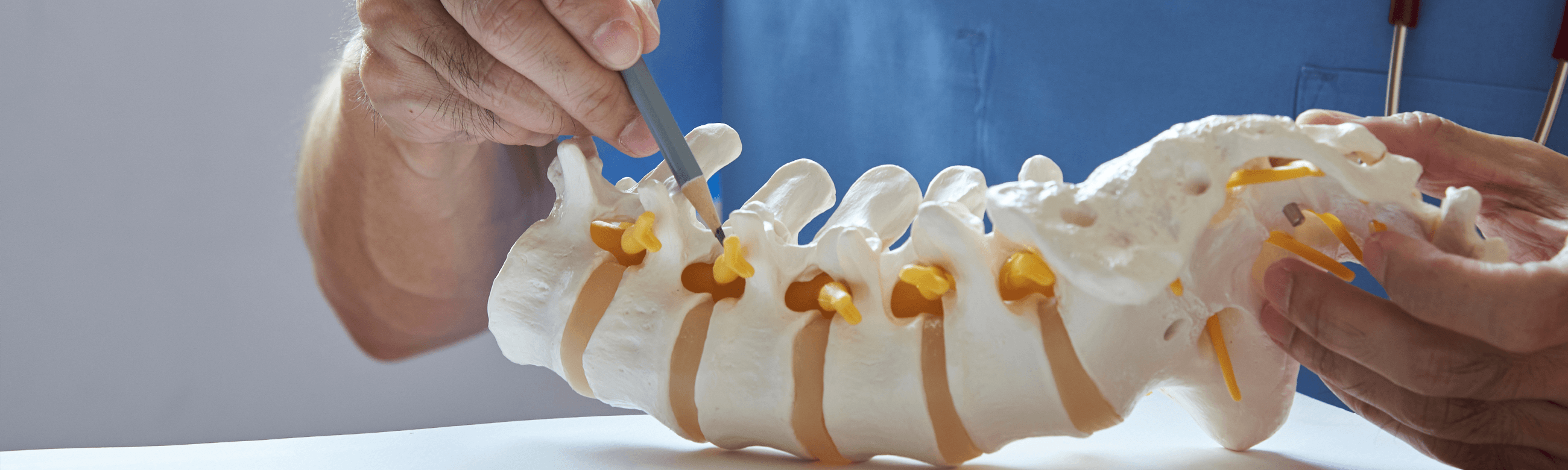
Minimally Invasive Spine Surgery (MISS) involves performing surgery on the cervical, thoracic, and lumbar spine with the smallest possible surgical trauma compared with conventional surgical methods. To achieve this, tubular dilators or an endoscope and microsurgical instruments are used, allowing surgical procedures to be performed with high precision, without the need for extensive surgical approaches. At the same time, with the use of an appropriate state-of-the-art neuronavigation system (O-arm, Medtronic), very small incisions or the percutaneous placement of screws are performed with remarkable precision. In contrast to traditional “open” surgery, MISS achieves less trauma to the tissues, reduced hospitalization time, much lower blood loss with usually negligible need for transfusion, minimization of postoperative pain, smoother and faster postoperative mobilization of the patient, as well as a reduction in the rate of wound infection.
Minimally invasive spine surgery can be applied for decompression of the nerve roots or spinal cord in appropriately selected patients in cases of disc herniation, osteophytes, foraminal or spinal stenosis; for stabilization of the spine with percutaneous spinal fusion in cases of instability and fractures; as well as in kyphoplasty/elastoplasty procedures for osteoporotic or metastatic fractures.
Brain Disorders
- Brain tumors, skull base tumors, pituitary tumors, ventricular system tumors, and craniovertebral junction lesions
- Intracranial and extracranial vascular diseases (aneurysms, arteriovenous malformations, Moya-moya disease)
- Traumatic injuries
- Disorders of cerebrospinal fluid circulation (hydrocephalus)
- Trigeminal neuralgia
- Spontaneous intracerebral hemorrhages
- Infectious diseases (abscesses, empyemas)
- Epilepsy (vagus nerve stimulation, temporal lobectomy)
- Parkinson’s disease (Deep Brain Stimulation - DBS)
Spinal Disorders
- Degenerative diseases of the cervical, thoracic, and lumbar spine (disc herniation, spinal stenosis)
- Tumors (epidural, intradural, intramedullary)
- Traumatic injuries, instability, and osteoporotic fractures along the entire spine
- Infectious diseases (spondylodiscitis, epidural abscess)
- Disorders of cerebrospinal fluid circulation (syringomyelia)
- Minimally invasive pain therapies (facet blocks, nerve root blocks, sacroiliac joint injections)
Peripheral Nerve Disorders
- Carpal tunnel syndrome
- Ulnar nerve entrapment syndrome
- Peripheral nerve tumors (schwannomas)
Medical Staff
Director, Neurosurgeon
Theofilos Machinis
Consultant Neurosurgeons
Christina Zournatzidi
Argyro Chondrozoumaki