


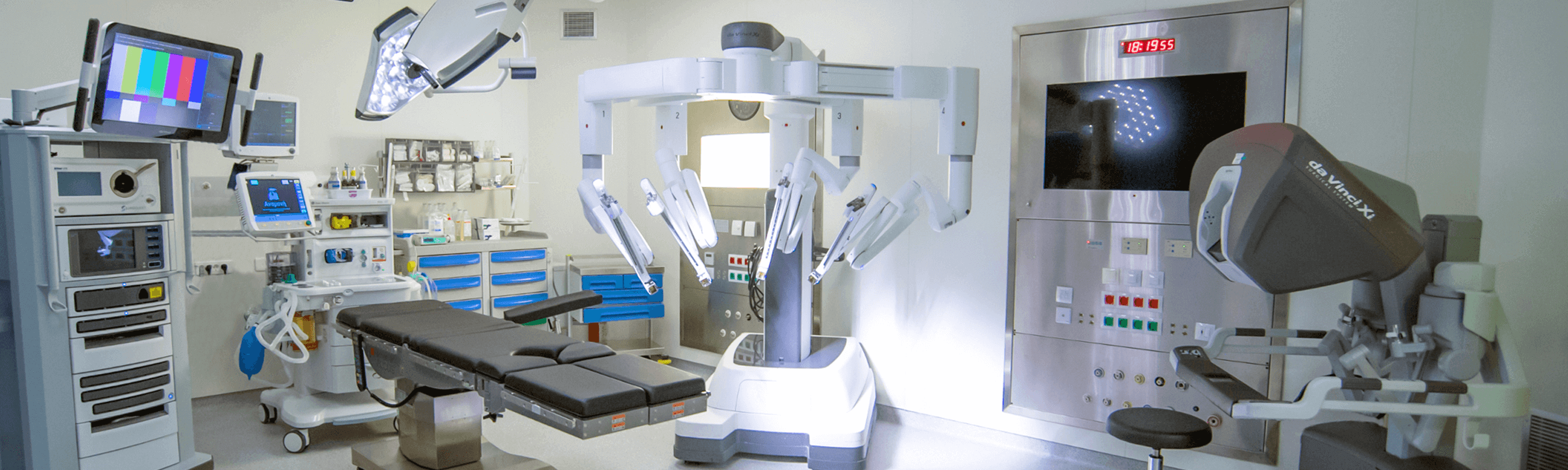




The Da Vinci Surgical System is the first robotic surgical platform approved by the U.S. Food and Drug Administration (FDA) in 2000 for performing surgical procedures. The technique was rapidly adopted by hospitals, initially in the United States and subsequently worldwide.
The Da Vinci Xi incorporates advanced dual-image synchronization technology, ensuring optimal resolution (focus-free technology) and eliminating image blurring. It also provides the highest level of surgical field visualization (Crystal Clear), featuring a three-dimensional (3D) optical system with magnification of up to 15×, enabling highly precise, stable, and refined movements.
The system is operated by a specially trained surgeon seated at a dedicated console. Through a computerized interface, the surgeon performs the procedure by manipulating ergonomic controls adapted to the fingers, effectively replicating natural hand movements. Each movement is translated with absolute precision and stability to the surgical field via the robot’s articulated arms.
This high level of accuracy is further enhanced by the surgeon’s visual access to the procedure through a specialized display offering up to 15× magnification, high-definition imaging with over 16 million colors (full high definition), and true three-dimensional (3D) visualization.
These advanced technological capabilities allow procedures performed with the Da Vinci Xi to achieve millimeter-level precision, highly detailed identification of anatomical structures, complete elimination of physiological hand tremor, and superior access to and manipulation of anatomical structures-capabilities not achievable with conventional open or laparoscopic surgery.
A prerequisite for the use of the system is that the surgeon has undergone specialized training, as its operation differs from both laparoscopic and conventional open surgical techniques. Upon completion of the required training, the surgeon obtains international certification as a Robotic -Console Surgeon.
Metropolitan General is among the few hospitals in Greece equipped with the Da Vinci Xi robotic system.
At Metropolitan General, strict control procedures ensure that the Da Vinci Xi is operated exclusively by certified robotic surgeons, supported by a specially trained team, including nurses and technical staff.
Robotic Surgery - Advantages
Robotic surgery represents the pinnacle of technological innovation in the field of surgery, combining the surgeon’s expertise with the technological precision of the system, offering significant advantages over both open and conventional laparoscopic surgery.
- It is a minimally invasive and minimally traumatic technique. All procedures are performed through even smaller incisions than those used in conventional laparoscopy, typically 3-4 ports, each measuring 5-8 mm.
- It ensures minimal blood loss and significantly reduced postoperative pain, as the incisions are extremely small.
- It substantially reduces the risk of intraoperative and postoperative complications, due to the superior three-dimensional visualization and the exceptional precision of movements provided by the Da Vinci system.
- It shortens hospital stay and promotes faster recovery, with improved aesthetic outcomes.
- It expands the capabilities of endoscopic surgery, enabling procedures that were previously extremely challenging with conventional laparoscopy.
- It minimizes the risk of postoperative adhesions.
- It allows the surgeon to perform movements with enhanced precision, eliminating physiological hand tremor and enabling superior surgical dexterity.
- It provides improved ergonomic conditions for the surgeon, who operates in a seated position within a carefully designed environment, resulting in reduced fatigue and increased precision during complex and prolonged procedures.
- The articulated robotic arms are capable of reproducing all movements of the human hand across all planes, with absolute precision.
- It enables the surgeon to plan the procedure using computer-based systems, utilizing imaging data of the patient’s internal organs derived from diagnostic examinations. The surgeon can also, during the procedure, retrieve and review relevant images on the display as needed.
Robotic Surgery - Applications in General Surgery
Robotic surgery is applied across multiple surgical specialties, including Urology, Gynecology, Cardiothoracic Surgery, and General Surgery.
In General Surgery in particular, the applications of the Da Vinci Xi system are continuously expanding, including procedures of increasing complexity, due to the enhanced dexterity and precision offered by the robotic platform. Indicative procedures performed robotically at Metropolitan General include (in alphabetical order):
- Achalasia repair (esophageal)
- Anti-reflux surgery (GERD) and/or hiatal hernia repair
- Abdominal wall hernia repair (inguinal, umbilical, incisional hernias)
- Gastrectomy for gastric neoplasms (cancer, GIST – gastrointestinal stromal tumors)
- Adrenalectomy for neoplasms and other adrenal gland disorders
- Hepatectomy for neoplasms and other hepatobiliary diseases (hepatocellular carcinoma – HCC, liver metastases—commonly from colorectal cancer, cholangiocarcinoma, echinococcosis, cysts, cystic neoplasms, polycystic liver disease)
- Colectomy for neoplasms and other colorectal conditions (cancer, polyps, adenomas, diverticular disease, ulcerative colitis, prolapse)
- Esophagectomy for esophageal neoplasms (cancer, leiomyoma)
- Pancreatectomy for neoplasms and other pancreatic diseases (cancer, neuroendocrine tumors, cystic tumors, IPMN)
- Splenectomy for hypersplenism and other hematologic splenic disorders (e.g., ITP)
- Bariatric surgery for morbid obesity (sleeve gastrectomy, gastric bypass)
- Cholecystectomy (particularly in complex cases involving chronic inflammation or adhesions following prior open surgery)
Overall, robotic surgery enables the performance of General Surgery procedures with a high degree of precision, significantly improving success rates and reducing morbidity, particularly in complex and high-risk operations.